Duncan Macleod
Fifty-eight seconds of steel
First noted
Notes from Duncan Macleod, a retired hoistway mechanic who spent twenty-four years on the tower above Bremner Boulevard.
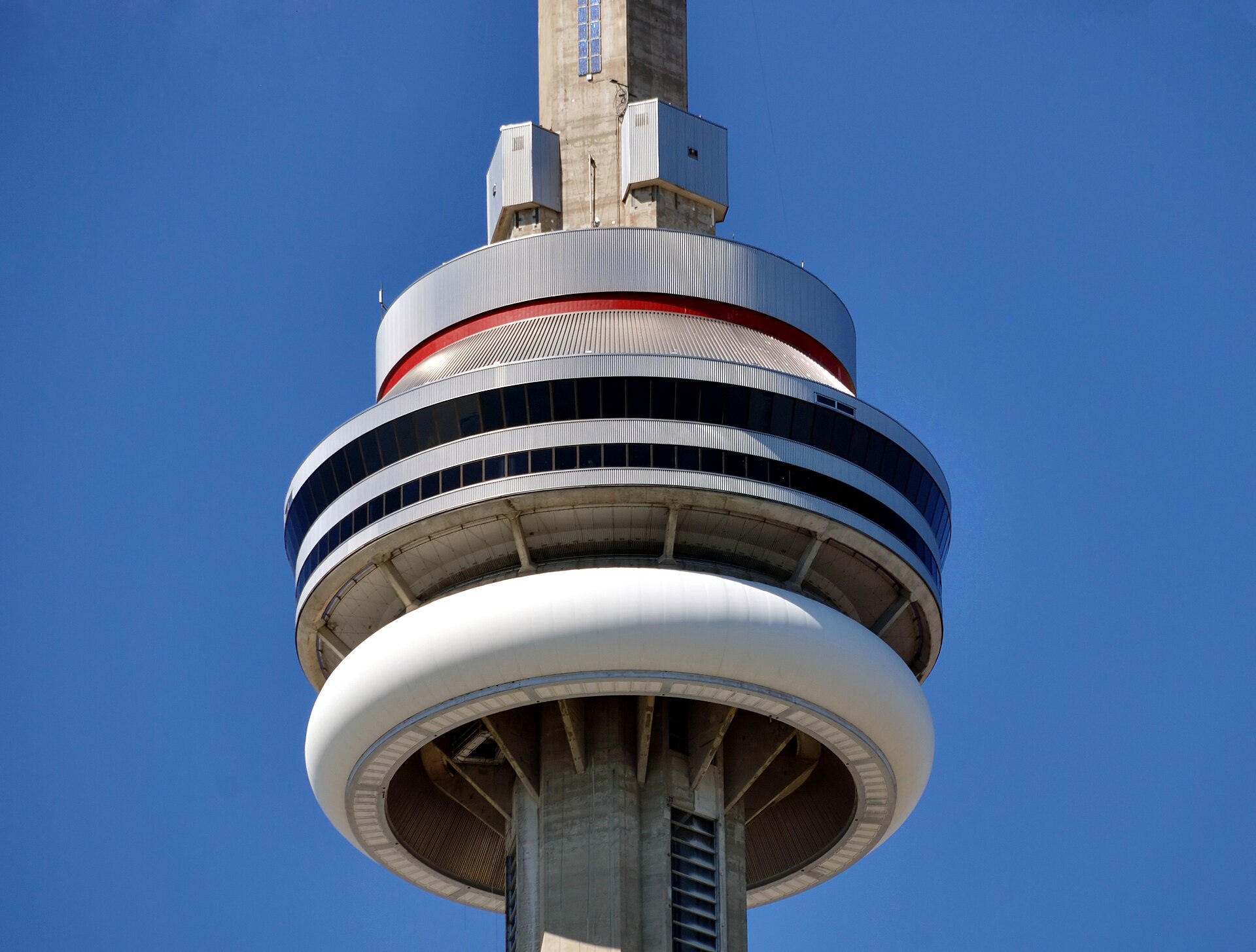
My name is Duncan Macleod and for twenty-four years my working day began by walking down Bremner Boulevard just after sunrise with a canvas bag of wrench extensions over one shoulder. I was a hoistway mechanic. I serviced the six high-speed glass lifts, the counterweights, the top-floor sheave bearings and, for a long stretch in the middle of my career, the wind dampers that keep the upper mast from drifting when the lake sends a gale across downtown.
This notebook is not a guidebook and it is not a shop. It is the sort of long letter I used to write to apprentices who moved away. Some things I learned about the building are small and surprising. Others are just practical: which deck is easier for an older visitor, when the glass floor shows the most, how a revolving dining room actually turns, and why staff sometimes close a lift even on a bright afternoon.
Below is the comparison I draw by habit whenever a visitor asks where to begin. It fits on a single page in my notebook and has saved me many long conversations on the pavement.
| Level | Height | What matters there |
|---|---|---|
| Glass floor | 342 m | Panels that look straight down the shaft; best for first-time steadying. |
| Main indoor deck | 346 m | Full-circle view, benches, warmer in winter, fewer sudden gusts. |
| Revolving dining floor | 351 m | A seventy-two-minute slow rotation; best after sunset. |
| Outdoor terrace | 356 m | Wind-aware; closed in high gusts and freezing rain. |
| Upper pod | 447 m | Separate lift from the main deck; smaller and quieter. |
I prefer the main deck for a first visit. Stand at a window for a few minutes without a camera and the city reassembles itself: the harbour islands, the brick low-rises along King, the clean grid of the Financial District. The glass floor is a good second step, but it works best when you have already adjusted to the height.
About the revolving dining floor. Visitors expect a strong motion and are often surprised by how still it feels. The mechanism moves the floor on a bearing ring while the walls and windows stay in place. Reserve for after sunset if you want to see the colour of the harbour change. The floor completes a turn in about seventy-two minutes, which is close enough to the length of an unhurried meal that most people see the whole city once.
I also write about the smaller things. How the lifts slow down when the wind at the mast exceeds a certain threshold; why the outdoor terrace closes before the indoor deck; where the queues really form on a Saturday; which train from the airport puts you at the SkyWalk doors in the shortest time. None of it is a secret. It is the kind of information a mechanic gathers by walking the same corridors every day for a long time.
These pages are independent. I do not sell admission, book meals, run tours, or take payments. If a page helps you plan a visit, that is enough. If you catch an inaccuracy, write me an honest letter and I will update the page.
— D.M.